

Answer first
Quick answer
Oral-film manufacturing quality depends on control of the complete process, from raw-material verification and dispersion through forming, drying, slitting, unit conversion and moisture-protective packaging. Buyers should ask for evidence tied to the specific product and manufacturing scope, not rely only on a logo or certificate image. Critical attributes commonly include identity, appearance, dimensions, mass or thickness, active-content uniformity, disintegration behavior, microbial limits and package integrity. The exact specification and sampling plan depend on formulation, intended use and market classification. Scale-up must demonstrate that mixing, coat weight, drying and converting remain controlled at commercial speed. Shelf life is supported by stability data using the final formula and final package. Changes to materials, process settings or packaging should be assessed through documented change control.
Key project parameters
- Raw-material identity and supplier controls
- Mixing, coating and drying controls
- Thickness, mass and content uniformity
- Disintegration and mechanical integrity
- Microbiological and package-integrity tests
- Final-pack stability protocol
Technology and quality should be evidenced, not implied
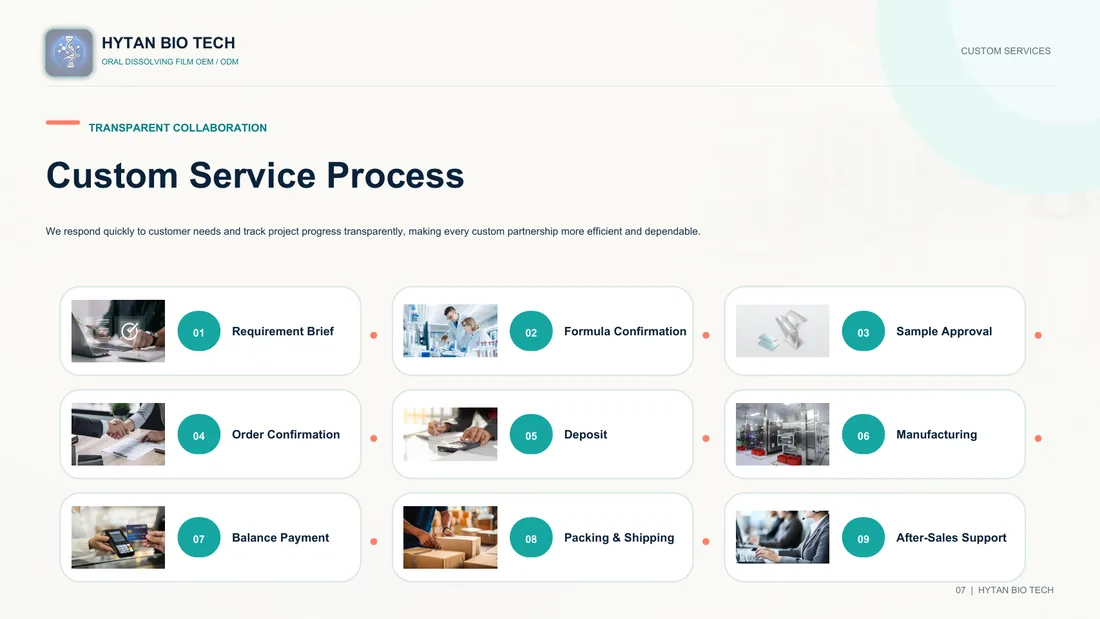
An oral film project crosses raw materials, liquid preparation, coating or casting, drying, slitting, unit conversion, packaging and release testing. Buyers should evaluate both process capability and the documents that support it.
- Defined material identity and supplier qualification
- Controlled mixing, forming, drying and converting parameters
- In-process checks tied to critical quality attributes
- Moisture-protective packaging selected for the formulation
- Batch records, deviations and release review
Request evidence relevant to your product
Facility certifications, product scope, test methods, specifications, stability approach, traceability and audit responses should match the actual project—not generic marketing claims.
Oral film process map
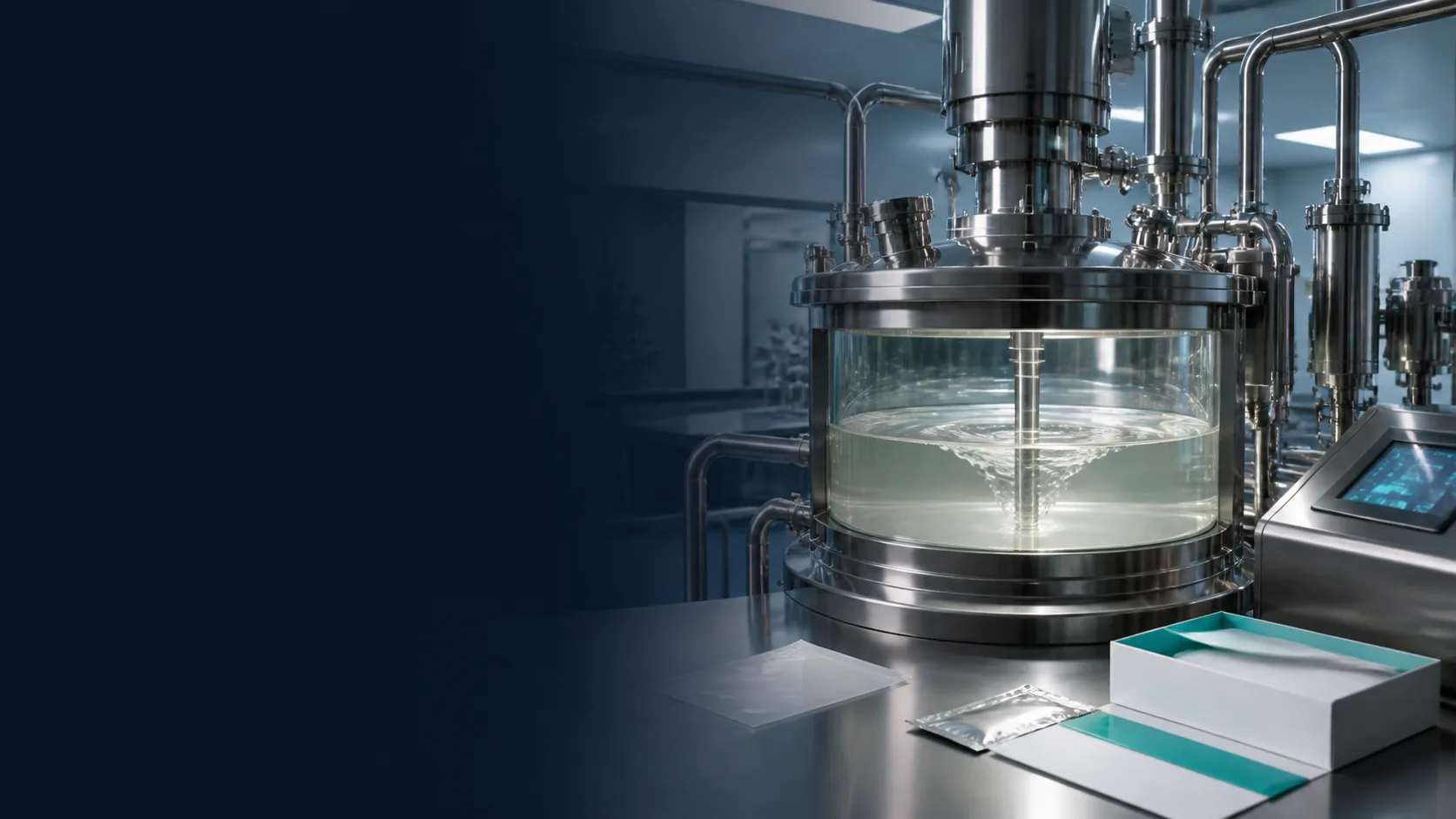
Dispersion
Control raw-material addition, hydration, uniformity, viscosity and entrained air.
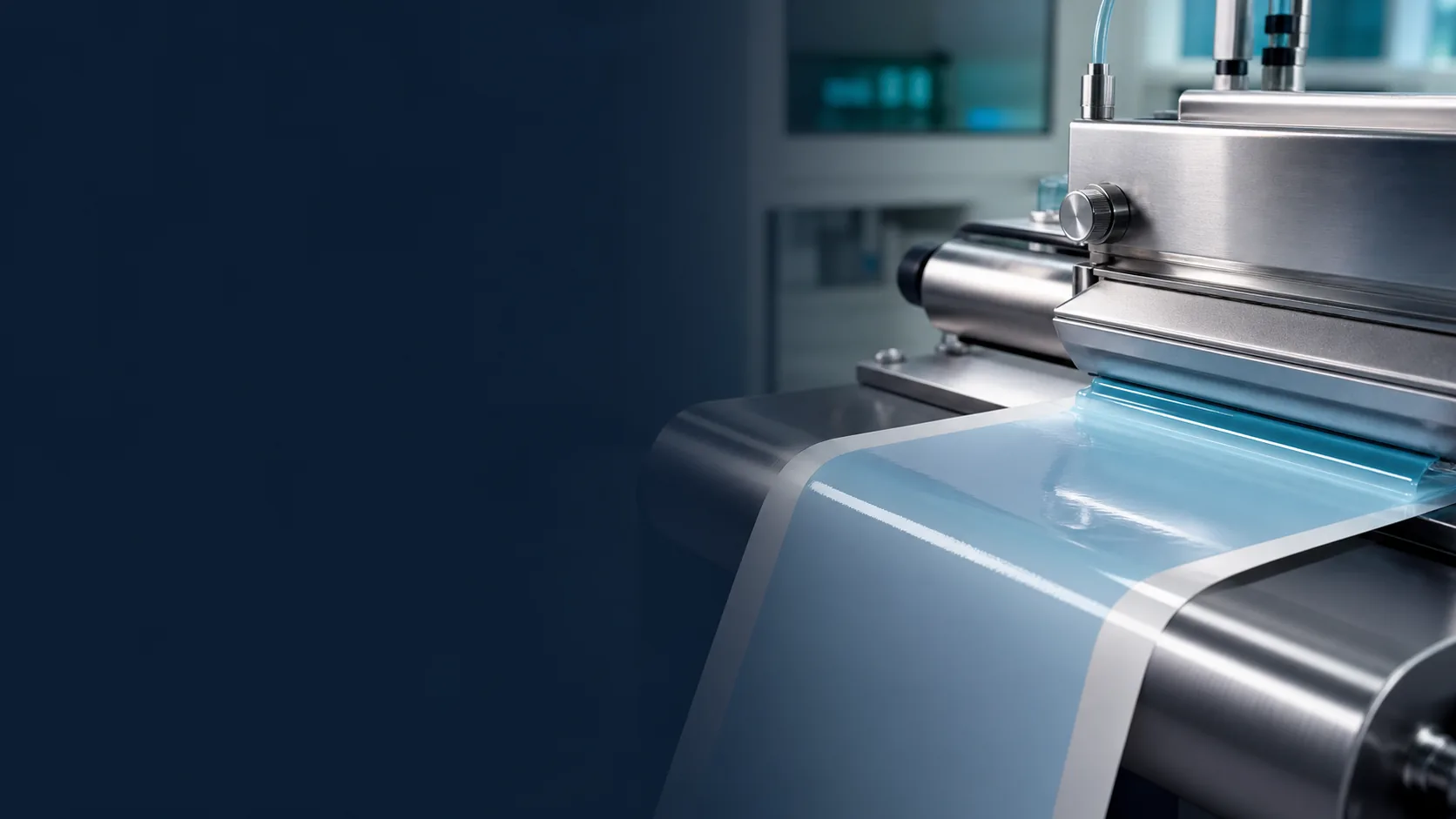
Film formation
Manage coating or casting geometry, wet thickness and distribution across the web.
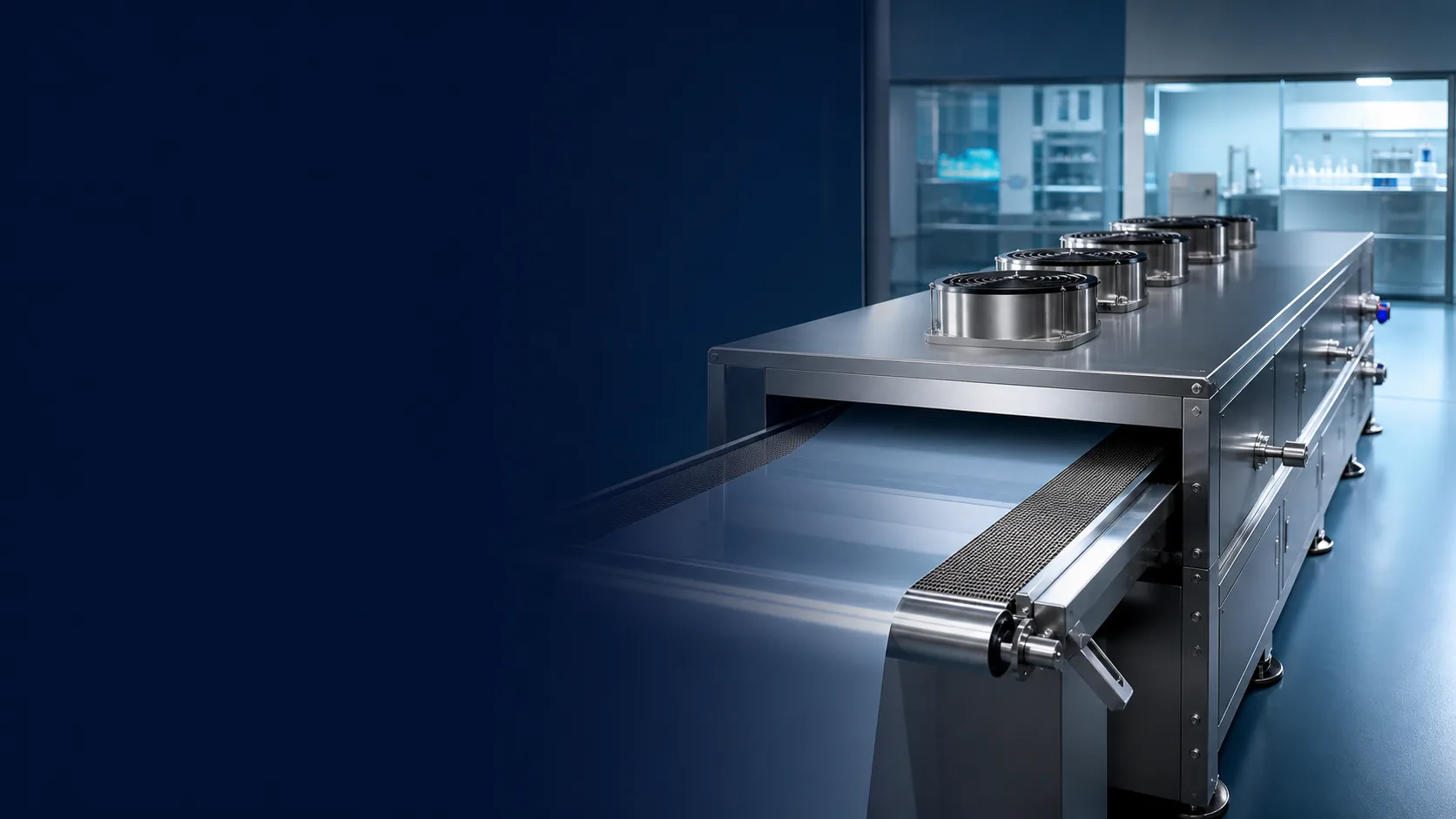
Drying & conversion
Balance residual moisture, mechanical behavior, cut dimensions and unit integrity.
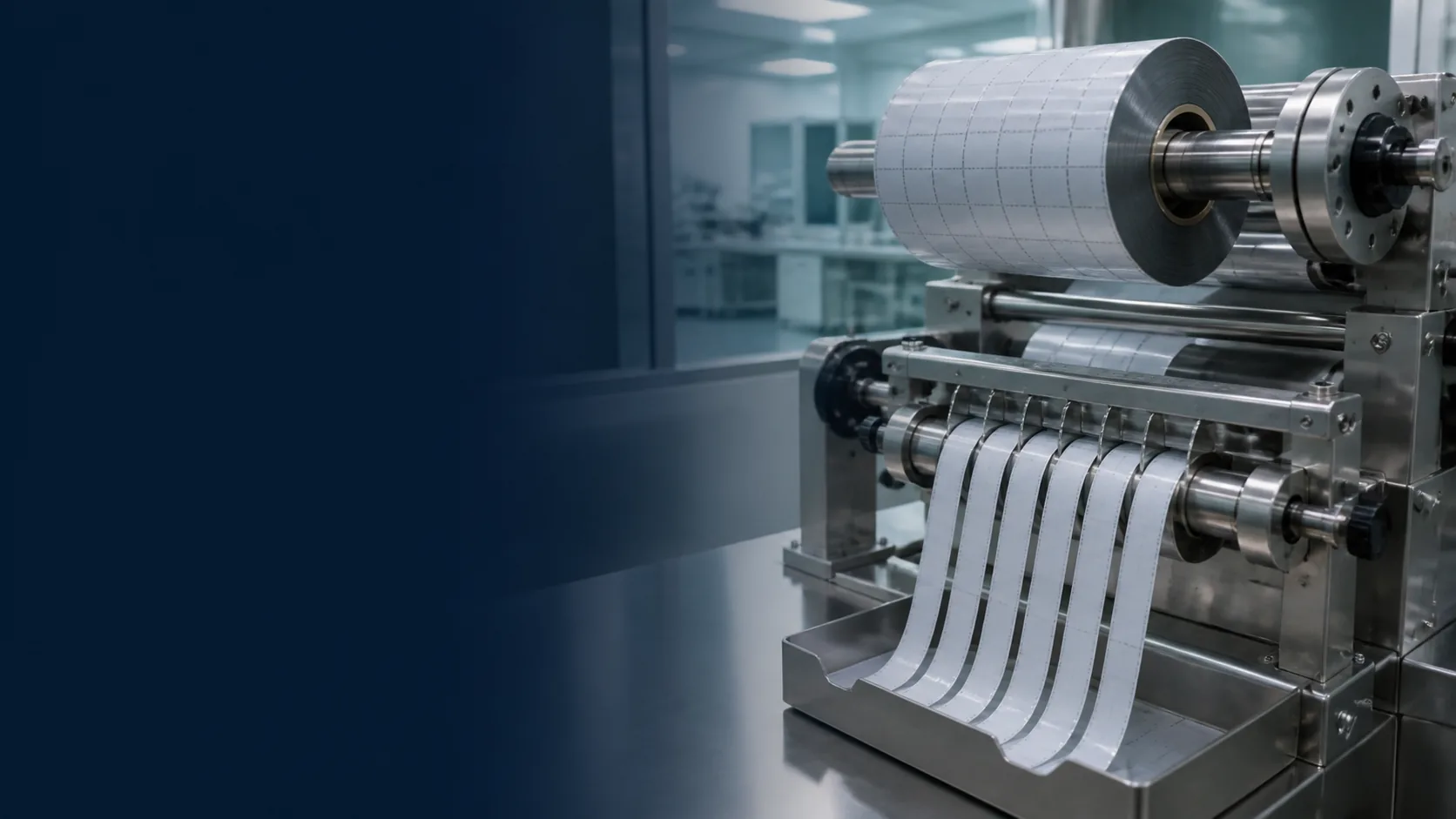
Barrier packing
Protect individual films from humidity, oxygen, light or aroma loss as needed.
Critical quality attributes
| Attribute | Why it matters | Typical evaluation |
|---|---|---|
| Appearance & dimensions | Consistent presentation and unit format | Visual inspection, thickness, weight and dimensional checks |
| Content & uniformity | Ingredient amount is controlled across units | Suitable analytical method based on product type |
| Mechanical behavior | Films survive converting, packing and handling | Handling, folding, tensile or related fit-for-purpose tests |
| Disintegration | Supports the intended oral use experience | Defined in-house or compendial approach where applicable |
| Microbiological quality | Supports product safety and release | Market- and category-appropriate limits and methods |
| Stability | Connects formula and pack to shelf-life support | Protocol covering chemical, physical, sensory and microbiological attributes |
Buyer evidence checklist
Facility scope
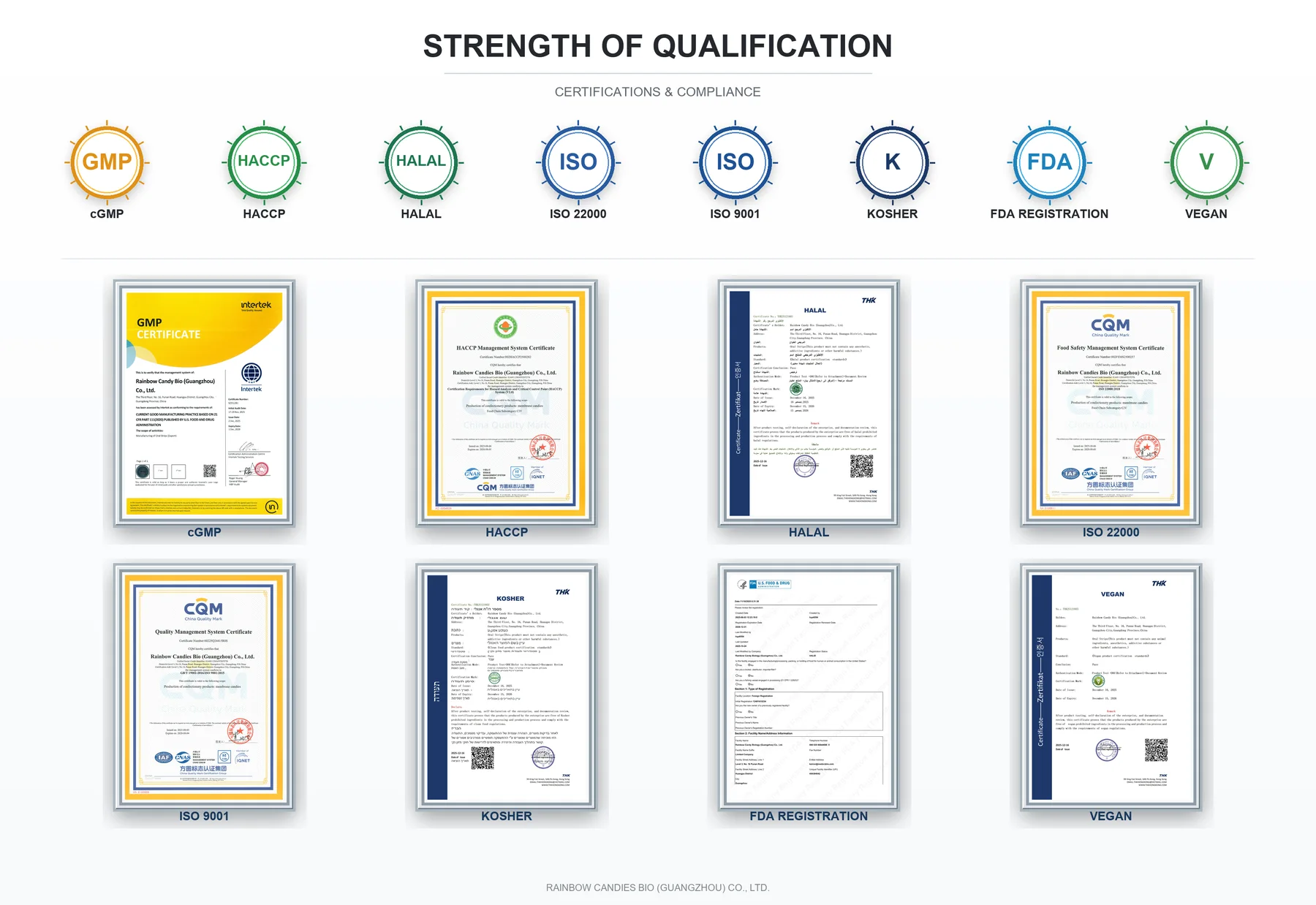
Current certificate, issuing body, address, scope and expiry date.
Quality system
Material control, traceability, deviations, CAPA, change control and complaints.
Product evidence
Specification, test methods, COA format, stability protocol and packaging data.
Buyer questions
Frequently asked questions
Which quality tests matter for oral films?
Typical controls include identity, appearance, dimensions, weight or thickness, active-content uniformity, disintegration, microbial limits and package integrity. The final panel is product- and market-specific.
Why is individual pouch packaging common?
Thin films can be sensitive to moisture and handling. A suitable individual barrier pouch can protect unit integrity, but material selection must be supported by compatibility and stability work.
What should buyers verify about certifications?
Verify certificate owner, site address, issuing body, scope, standard, validity dates and whether the relevant manufacturing activity is covered. A displayed logo alone is insufficient evidence.
How is commercial scale-up controlled?
Scale-up confirms that mixing, coat weight, drying, slitting, conversion and packaging controls remain capable at production scale against an agreed specification and sampling plan.
Last reviewed: . Project parameters remain subject to formula, packaging and target-market review.
Oral dissolving film OEM/ODM capability backed by documented quality systems
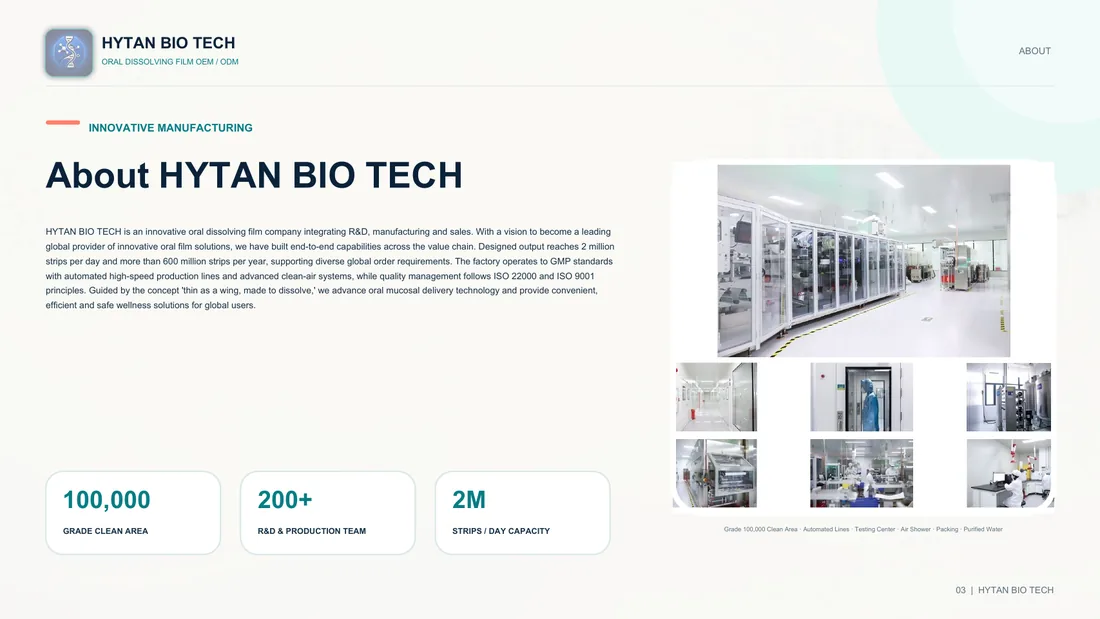
HYTAN BIO TECH integrates oral film R&D, formulation development, manufacturing and sales support. The supplied company profile describes a designed output of up to 2 million strips per day, 600 million+ strips per year, automated high-speed production lines, a Grade 100,000 clean area, and a 200+ R&D and production team.
HYTAN BIO TECH is positioned as an oral dissolving film company integrating R&D, manufacturing and sales support for OEM/ODM projects.
The brochure lists a designed output of up to 2 million strips per day and 600 million+ strips per year, supported by automated high-speed production lines.
The facility information references a Grade 100,000 clean area, clean-air systems, air-shower flow, purified-water support and in-house testing areas.
Quality references include cGMP, HACCP, Halal, ISO 22000, ISO 9001, Kosher, FDA registration and Vegan documentation for buyer qualification review.
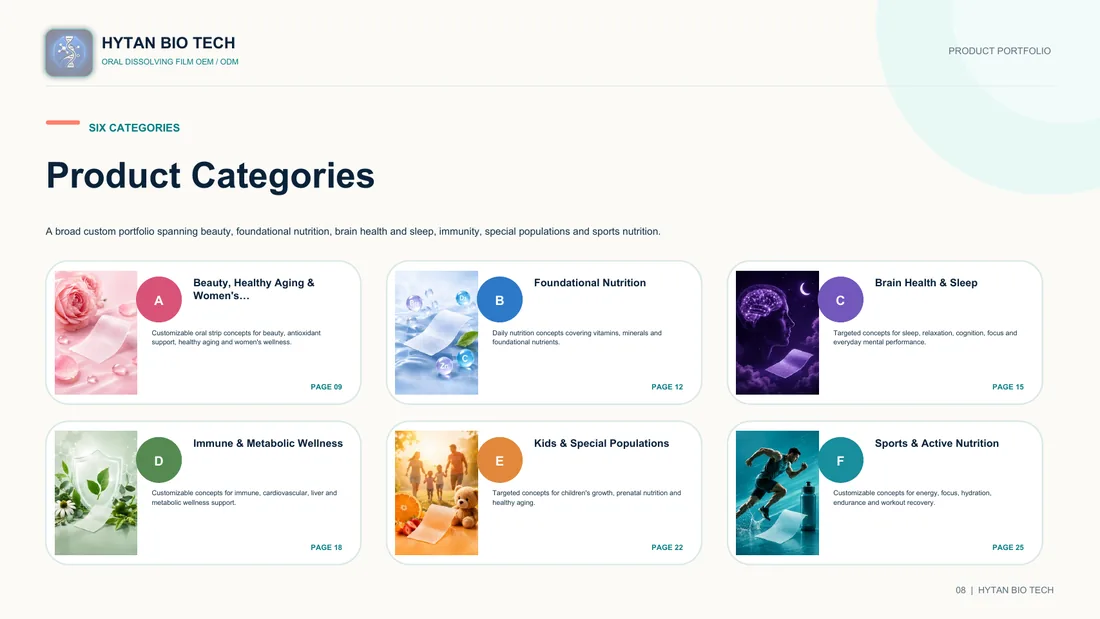
Thin oral dissolving films are presented as portable, discreet and water-free dosage formats. The profile highlights rapid disintegration, easier administration for users who dislike swallowing tablets or capsules, and flexible customization for active ingredients, flavor, color, strip size and packaging. Performance and claims should always be confirmed by formula, testing data and target-market requirements.