Answer first
Quick answer
A custom oral-film project should select the least complex development route that still meets the brand objective. An existing-formula route may shorten evaluation where the ingredient, format and market fit are already established. Formula adjustment can modify flavor, appearance, dimensions or selected components within technical limits. Exclusive development is appropriate when the active system or positioning needs original work, while a feasibility study is the correct first step for uncertain loads, sensitive materials or challenging tastes. All routes still require confirmation of film integrity, dose uniformity, disintegration, sensory acceptance, package compatibility and target-market compliance. The route determines project scope, evidence, timing and commercial assumptions; it does not guarantee a specific claim or performance outcome. Define which changes are essential and which are preferences before prototype work begins.
Key project parameters
- Existing, adjusted, exclusive or feasibility route
- Ingredient identity and specification
- Target amount and unit dimensions
- Flavor, mouthfeel and appearance
- Packaging barrier and presentation
- Evidence, market and claims requirements
Choose the route that matches your project maturity
Launch-focused private label
Prioritize a clear target consumer, differentiated format, realistic formula and packaging story. Start with the few variables that create meaningful brand value.
Portfolio extension
Translate brand standards, approved ingredient sources and quality expectations into an oral film-specific specification.
Feasibility-led collaboration
Begin with dose, API properties, intended route and regulatory strategy. Pharmaceutical ODF development requires a separate evidence and quality pathway from food or supplement products.
Channel-specific format
Align unit count, carton, case pack, shelf communication and documentation with the destination channel and market.
Customization map
Formula
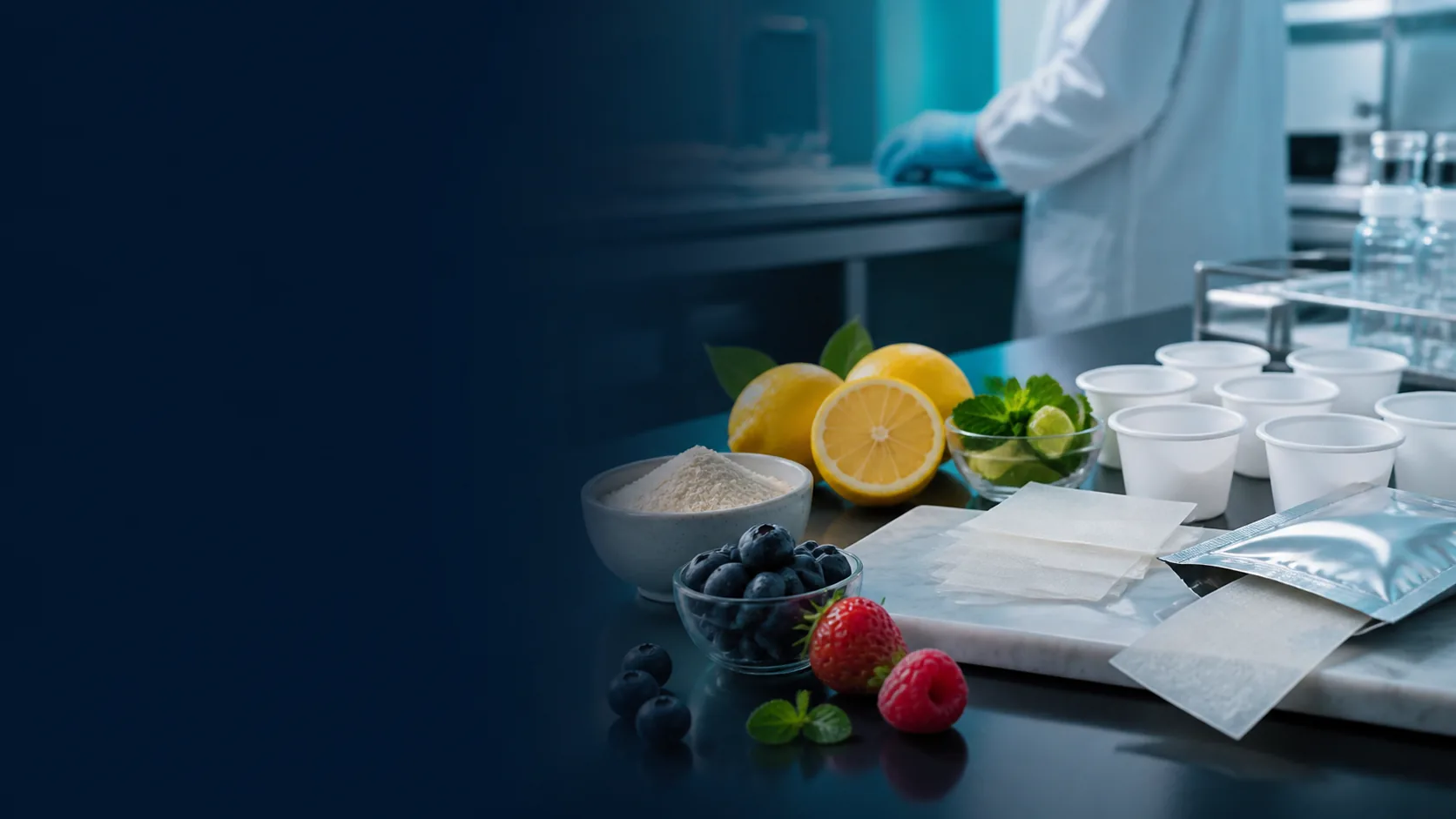
Active ingredients, excipient platform, sweetener, flavor and color direction.
Physical format
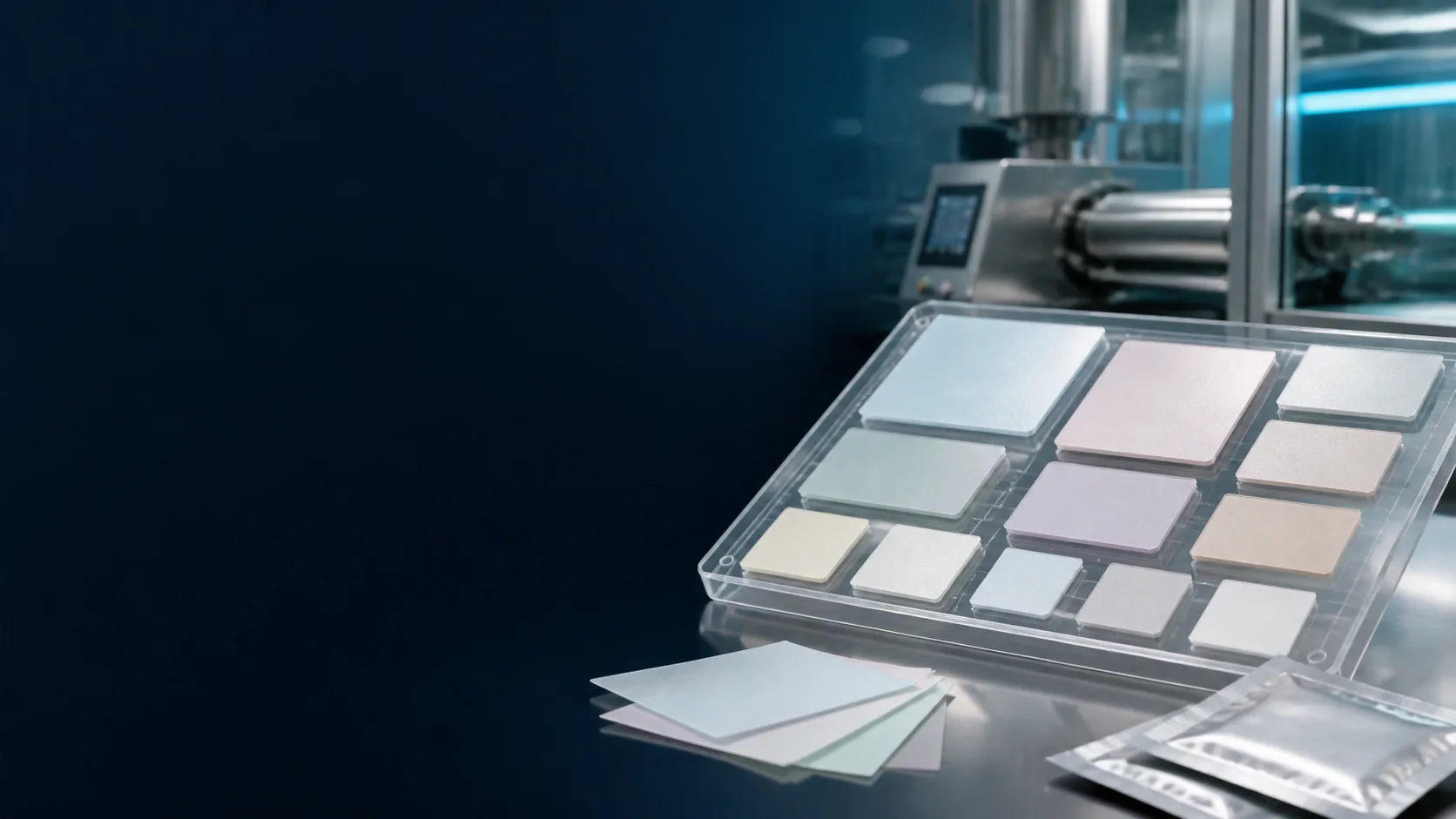
Strip dimensions, thickness target, handling strength and disintegration direction.
Primary pack
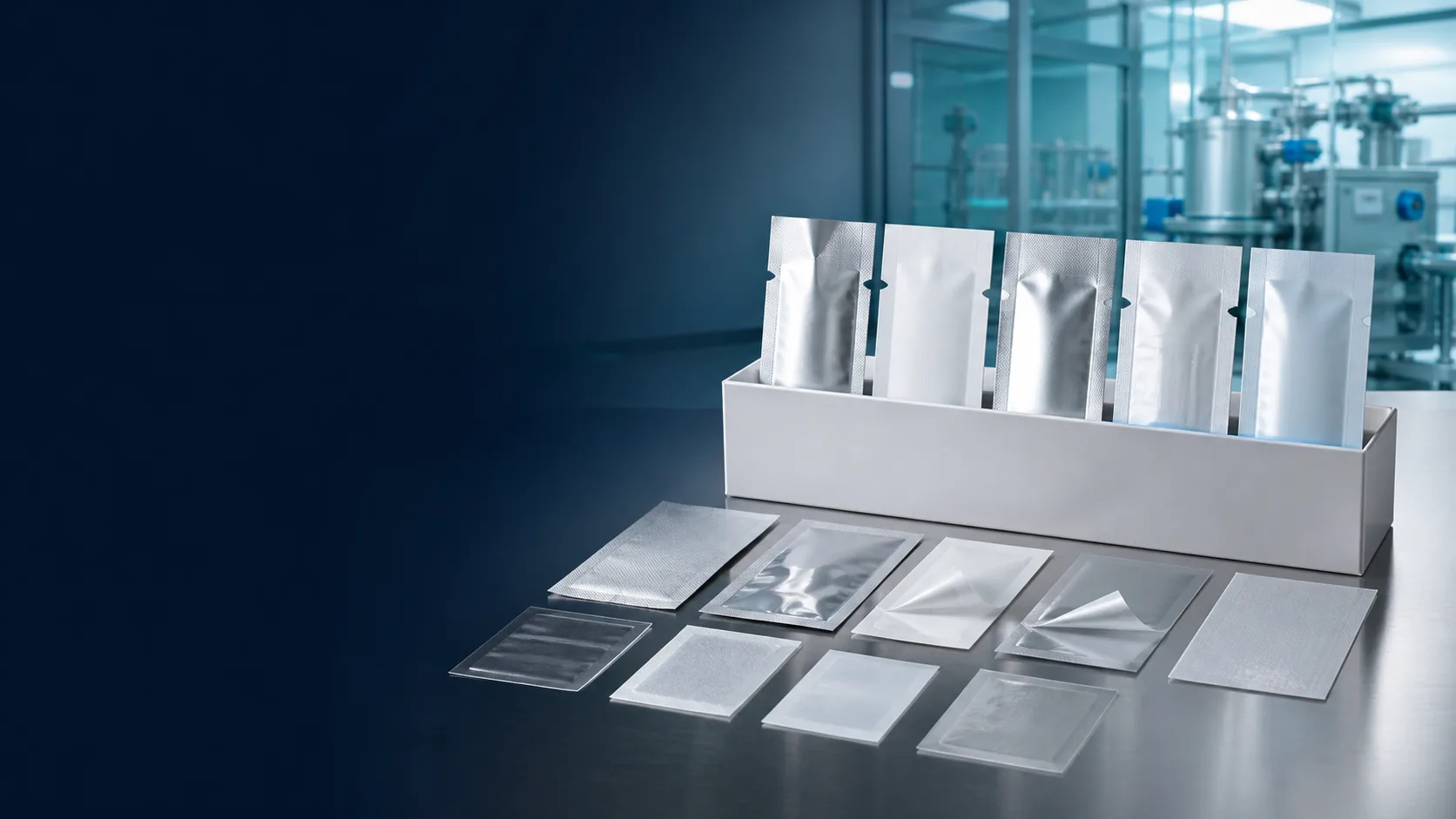
Unit pouch material, opening experience, print and barrier requirements.
Secondary pack
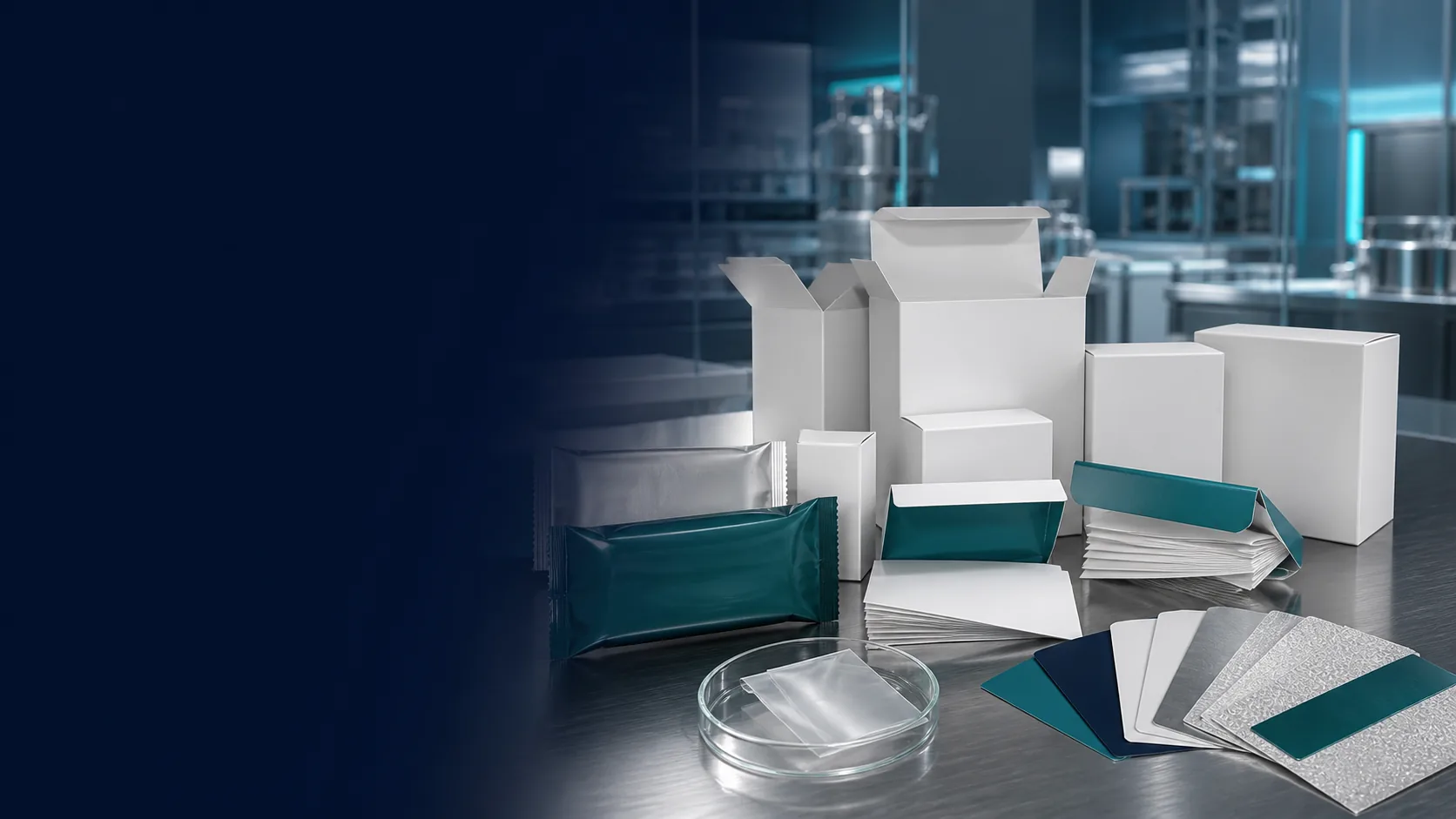
Carton size, unit count, inserts, display format and shipping configuration.
Decision framework
| Route | Best when | Main decisions |
|---|---|---|
| Standard concept | Speed and lower development complexity matter most | Flavor, presentation, packaging and market fit |
| Adjusted formula | A base concept is close but needs differentiation | Ingredient compatibility, sensory impact and verification |
| Exclusive formula | The formula is central to brand positioning | Feasibility, evidence, stability, ownership and change control |
| Feasibility study | Technical uncertainty is high | Loading, film formation, taste, stability and classification |
Need help choosing a route?
Send the ingredient list, target market and commercial stage. We will frame the key questions before quotation.
Buyer questions
Frequently asked questions
Which customization route should a brand choose?
Choose an existing formula for lower uncertainty, an adjusted formula for limited changes, exclusive development for differentiated systems, or a feasibility study when the technical path is not yet known.
Can any ingredient be made into an oral film?
No. Solubility or dispersibility, target amount, particle properties, taste, stability, compatibility and process exposure may make a request impractical or require a different format.
Can flavor and film size be customized?
Often yes, within the mechanical, dose-uniformity, disintegration and packaging limits established during prototype work. Changes to one parameter may affect the others.
Who confirms regulatory status and claims?
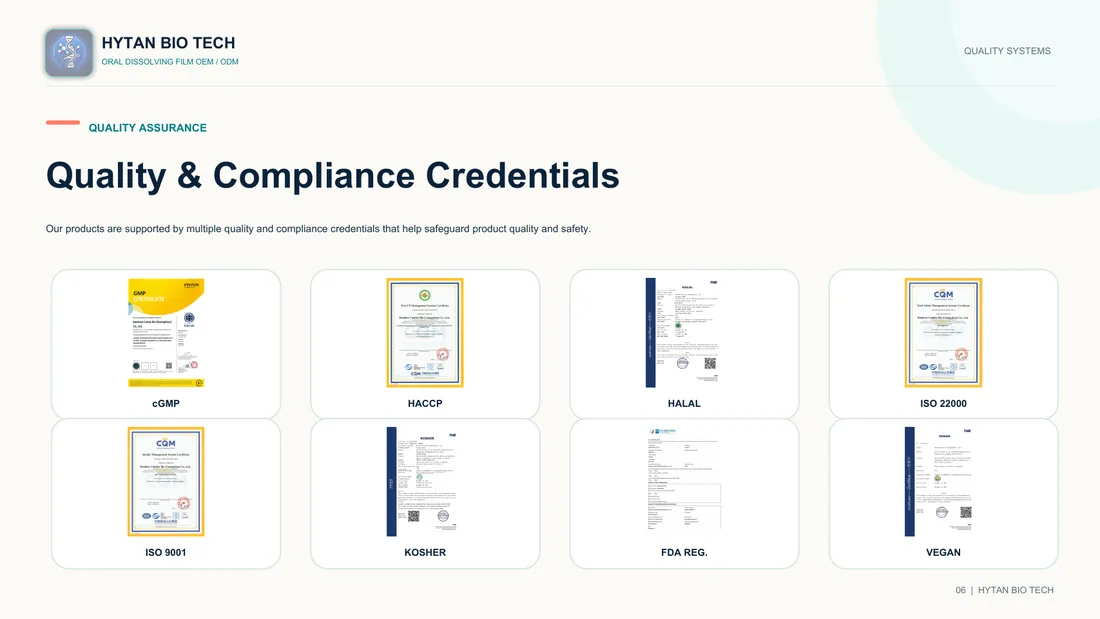
The project must be reviewed for the intended market and product classification. The brand remains responsible for final legal positioning, labeling and claims approval with qualified advisers.
Last reviewed: . Project parameters remain subject to formula, packaging and target-market review.
From formula brief to scalable oral strip production
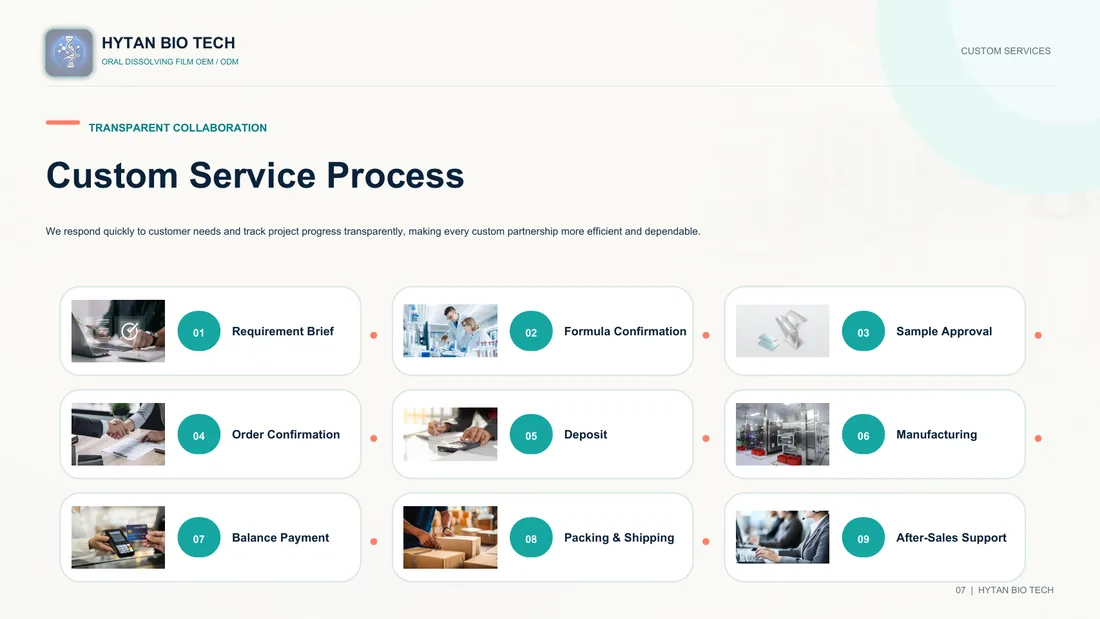
The brochure outlines a practical custom-development flow: requirement brief, formula confirmation, sample approval, order confirmation, manufacturing, packing, shipping and after-sales support. This content is suitable for B2B buyers comparing formulation, flavor, packaging and compliance readiness.
- Requirement briefTarget market, active concept, dosage, flavor, packaging and order plan.
- Formula confirmationReview ingredient compatibility, film base, taste masking and compliance direction.
- Sample approvalPrepare and evaluate prototype strips before confirming specifications.
- Manufacturing & deliveryProceed with production, packing, shipping documents and after-sales support.
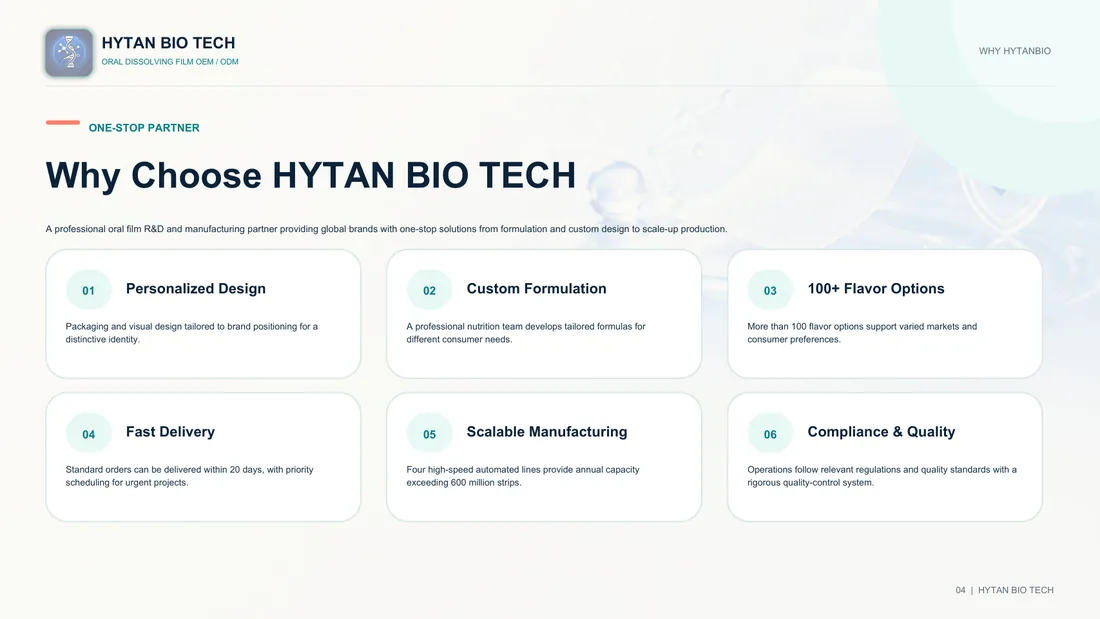
The company profile references personalized product design, custom formulation, 100+ flavor directions, flexible packaging support and scalable manufacturing. Standard-order lead time is described as within 20 days in the profile, subject to confirmed formula, packaging and order specifications.