
Answer first
Quick answer
The OEM/ODM route covers project definition, formula feasibility, prototype development, film engineering, packaging selection, quality planning and scale-up. OEM is most appropriate when the buyer supplies a defined formula or specification; ODM can include more development support, but neither term removes the need for technical and market review. A useful brief identifies the active material, specification, amount per strip, target market, claims direction, flavor, pack format, forecast and launch window. Minimum order, lead time and price cannot be quoted responsibly from the product name alone. They depend on formula maturity, raw-material sourcing, testing, print configuration and production route. Commercial approval follows agreed prototype, specification and evidence gates. Each gate should identify the owner, acceptance criteria, required documents and effect of later changes.
Key project parameters
- Formula ownership and development route
- Prototype and sensory approval
- Critical quality attributes and test methods
- Primary pouch and print configuration
- Pilot-to-commercial scale-up
- Target-market documentation and claims boundary
A stage-gated oral film development service
Our OEM/ODM framework connects commercial goals with formulation, film forming, sensory, packaging and quality decisions. The exact path depends on whether you start from a standard concept, a formula adjustment or a new formula.
- Product brief and target-market intake
- Ingredient and dosage feasibility screen
- Prototype direction and sensory evaluation
- Packaging barrier and artwork coordination
- Specification, testing and commercialization planning
Prepare a one-page project brief
Include target market, formula or ingredient list, amount per strip, desired claims, film size, flavor, pack format, forecast and launch window.
Four development routes
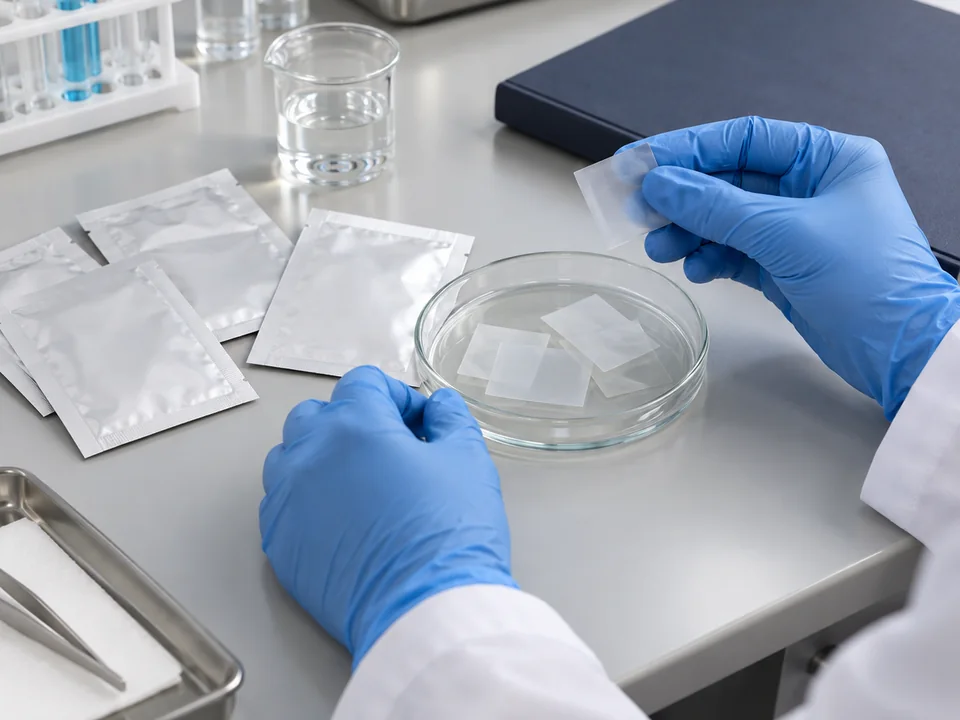
Standard concept
Evaluate an existing development direction with brand and packaging customization.

Formula adjustment
Modify selected actives, flavor or product attributes within feasibility boundaries.

Exclusive formula
Develop a differentiated concept with defined performance and evidence requirements.
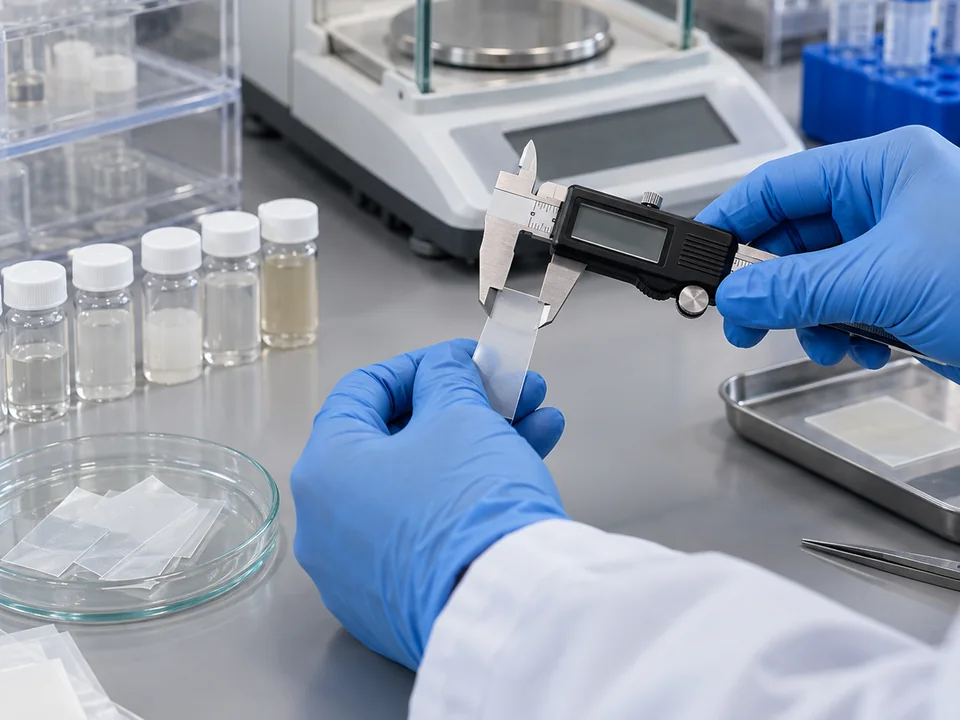
Feasibility study
Resolve uncertain loading, stability, taste or classification questions before sampling.
Typical project gates
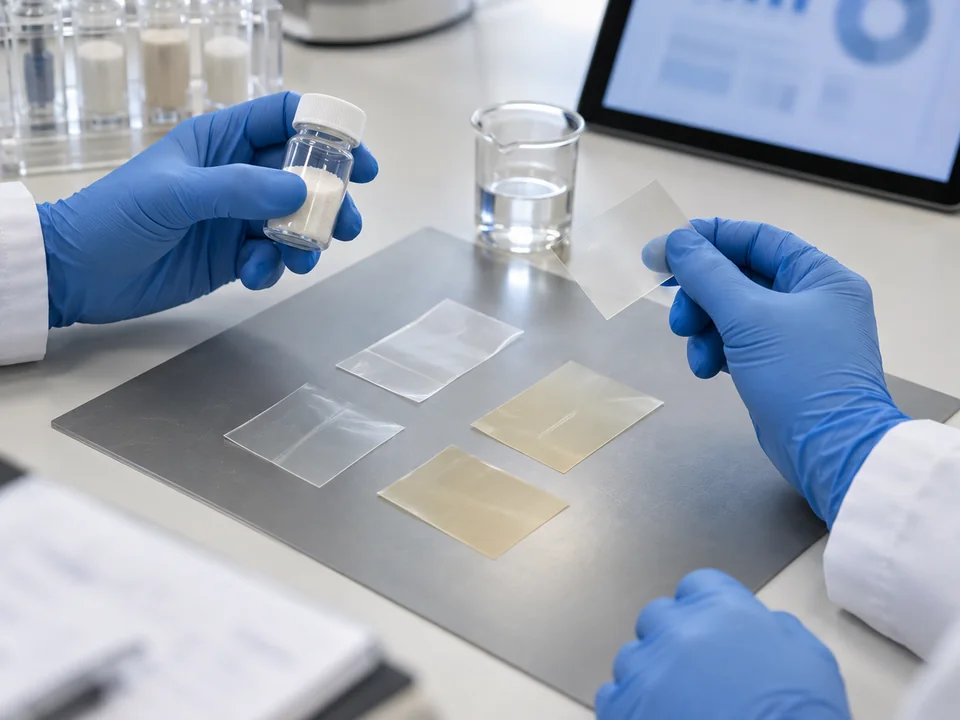
Gate 1 — Feasibility
Confirm the product objective, ingredient documentation, target amount, market and practical film constraints.
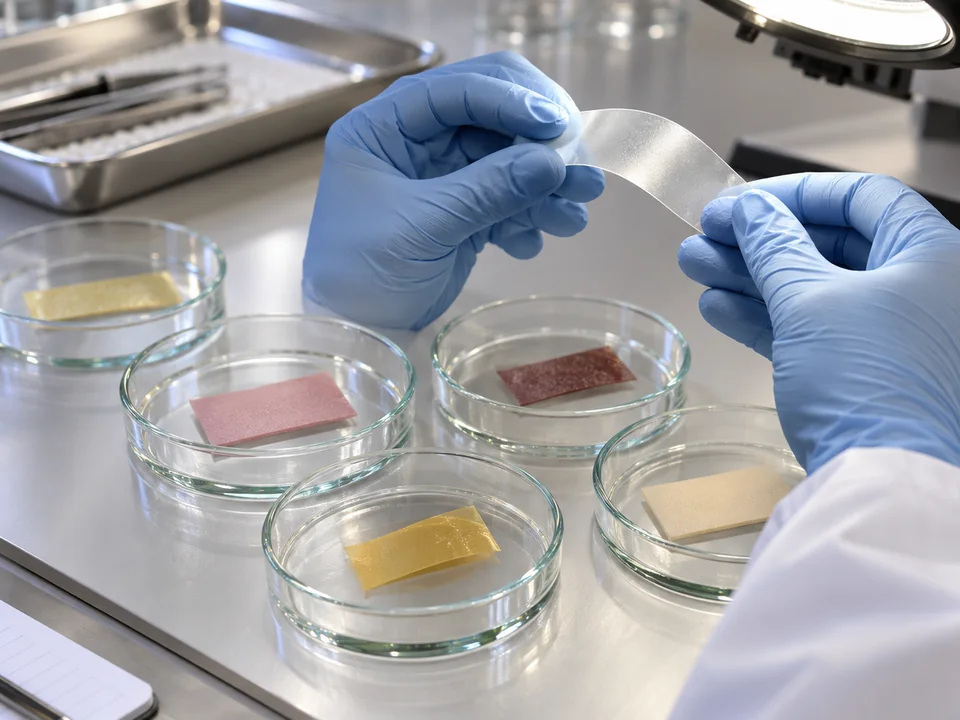
Gate 2 — Prototype
Evaluate visual appearance, handling, taste, mouthfeel and disintegration against an agreed brief.
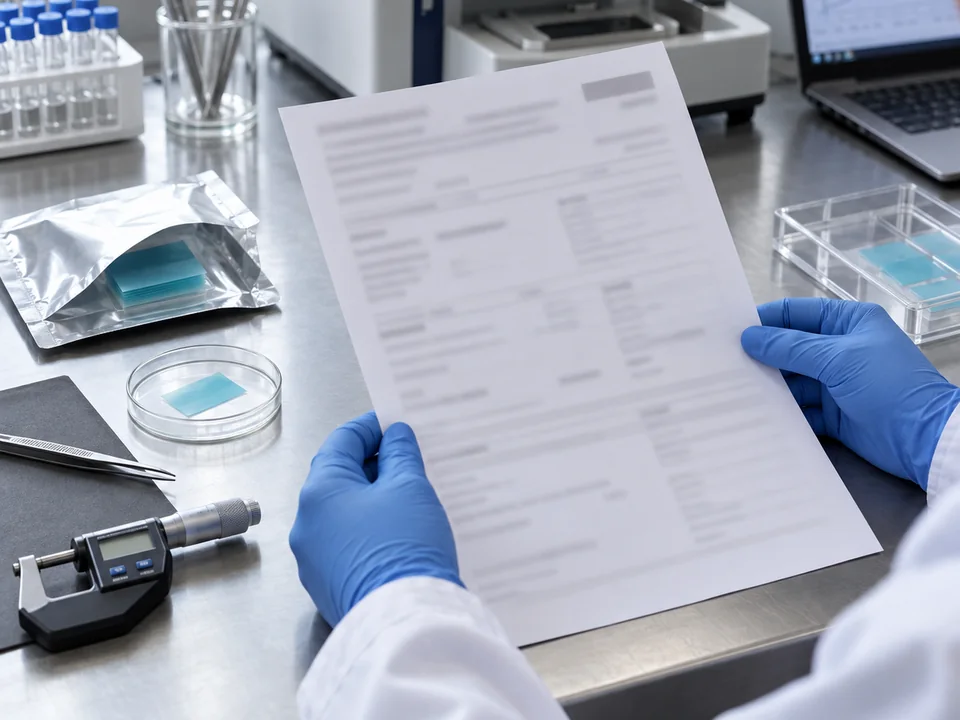
Gate 3 — Specification
Define critical quality attributes, packaging, test methods and acceptance expectations.
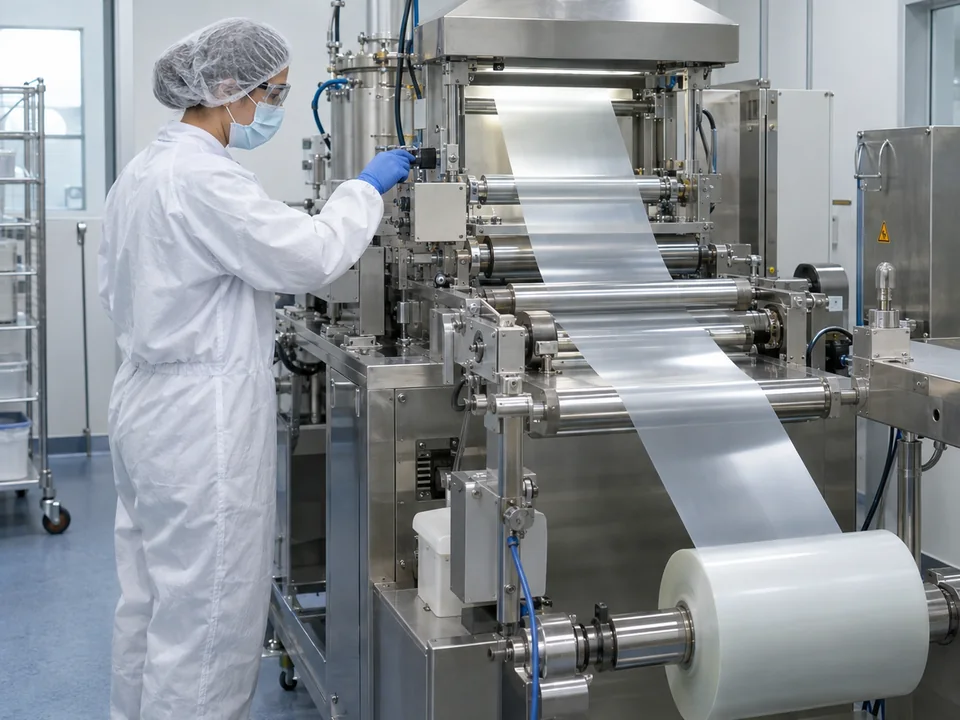
Gate 4 — Pilot
Review process behavior at a larger scale and update controls or specifications where needed.
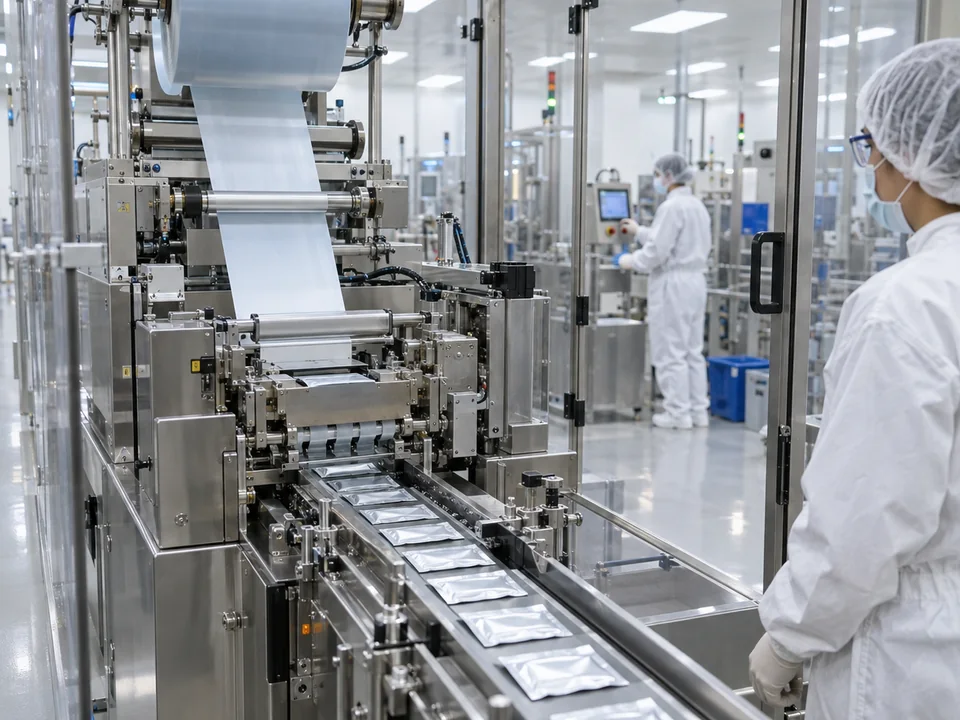
Gate 5 — Commercial
Confirm production planning, approved artwork, batch documentation and release workflow.
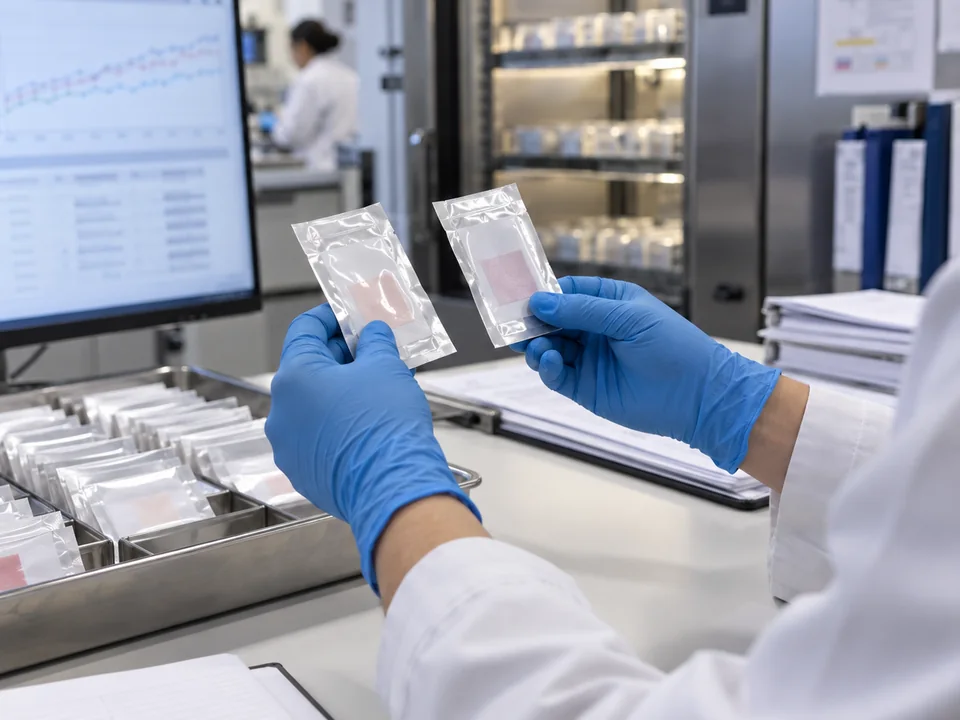
Gate 6 — Lifecycle
Track change control, complaint feedback, stability commitments and reordering inputs.
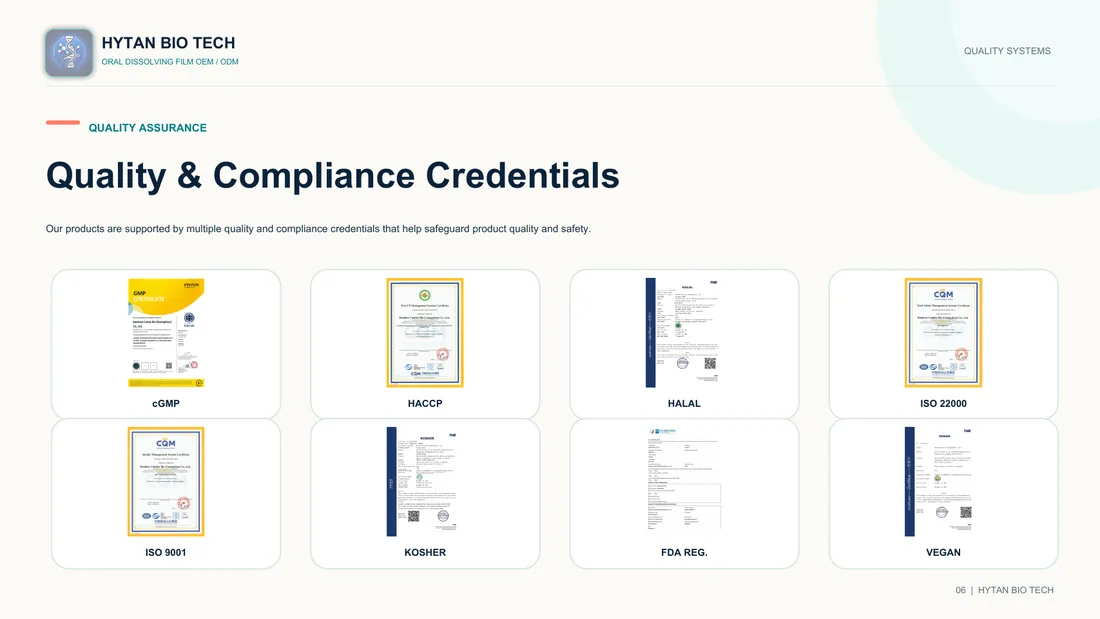
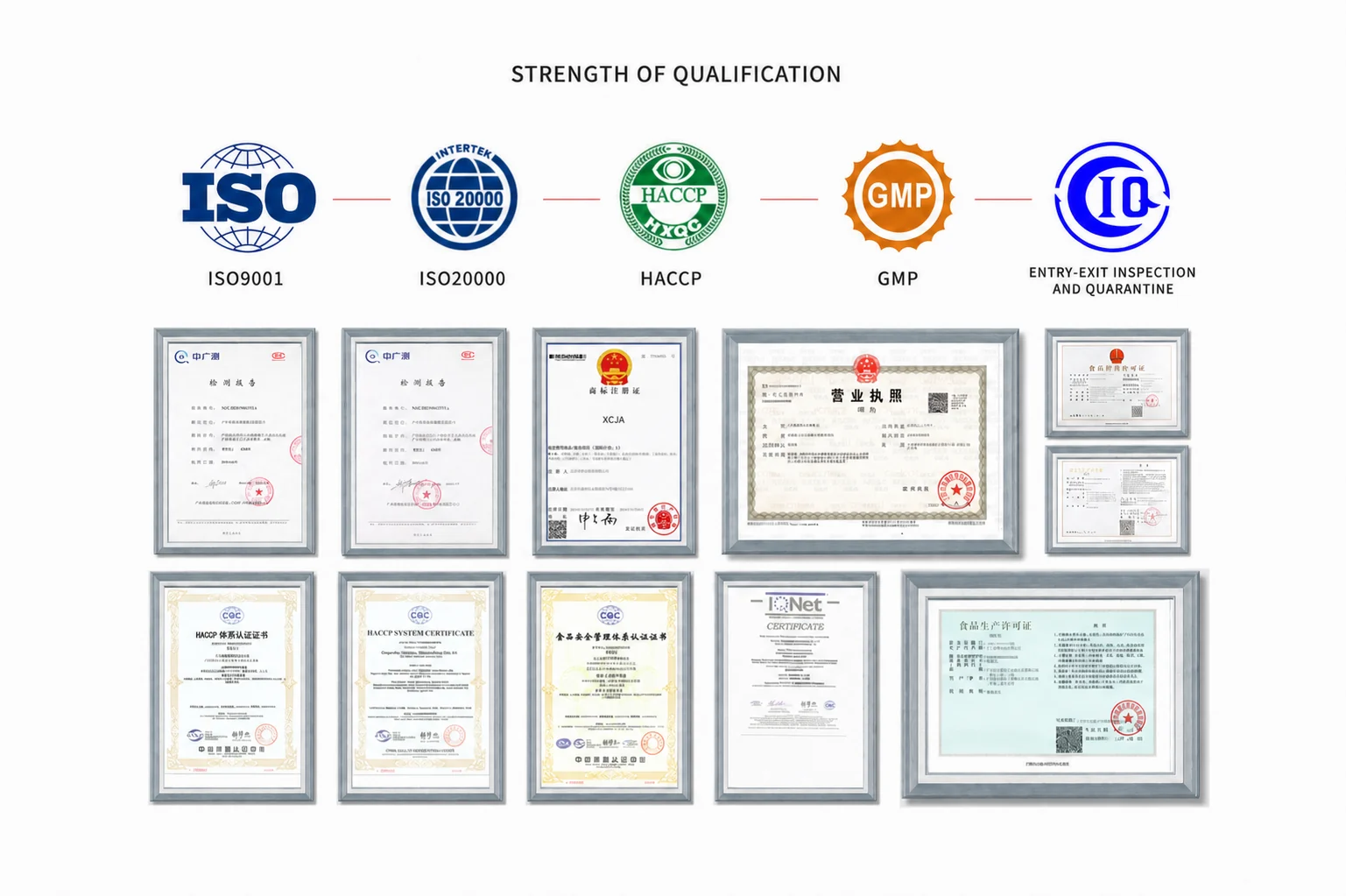
Manufacturing Qualification Overview
Selected qualification documents give B2B buyers an overview of the manufacturing and quality-management framework supporting OEM/ODM projects. Certificate scope, current validity and project relevance are reviewed against the proposed product, production site and destination market before commercial confirmation.
Commercial variables that affect quotation
There is no responsible universal MOQ or lead-time promise. Quotation depends on formula novelty, raw-material minimums, testing scope, packaging configuration, artwork readiness, pilot needs and target-market documentation. A complete brief produces a more useful answer than a generic price request.
2026 Oral Film Product Brochure
Review 48 portfolio directions, the custom service process, quality boundaries and flavor options. PDF and editable PPT downloads are available.
Buyer questions
Frequently asked questions
What is the difference between oral film OEM and ODM?
OEM normally starts from a buyer-defined formula or specification. ODM includes more supplier-led development. In both routes, formula feasibility, packaging, quality and target-market compliance still require approval.
What determines MOQ?
MOQ depends on formula route, batch and converting efficiency, raw-material purchase quantities, pouch and carton print setup, testing and the number of SKUs. It should be confirmed after the project brief.
How long does development take?
Timing depends on formula maturity, material availability, prototype rounds, stability needs, packaging artwork and documentation. A responsible timeline is milestone-based rather than a universal number.
Can you guarantee a requested dose or dissolve time?
Not before feasibility and prototype testing. Loading, uniformity, thickness, film strength, taste and disintegration interact, so the achievable specification must be demonstrated.
Last reviewed: . Project parameters remain subject to formula, packaging and target-market review.
From formula brief to scalable oral strip production
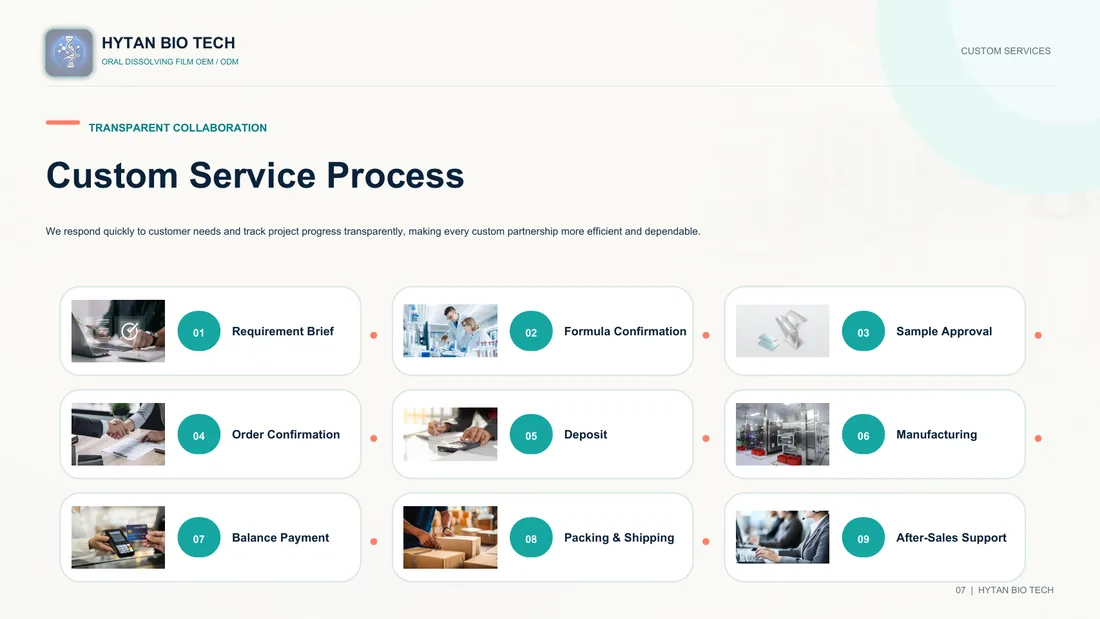
The brochure outlines a practical custom-development flow: requirement brief, formula confirmation, sample approval, order confirmation, manufacturing, packing, shipping and after-sales support. This content is suitable for B2B buyers comparing formulation, flavor, packaging and compliance readiness.
- Requirement briefTarget market, active concept, dosage, flavor, packaging and order plan.
- Formula confirmationReview ingredient compatibility, film base, taste masking and compliance direction.
- Sample approvalPrepare and evaluate prototype strips before confirming specifications.
- Manufacturing & deliveryProceed with production, packing, shipping documents and after-sales support.
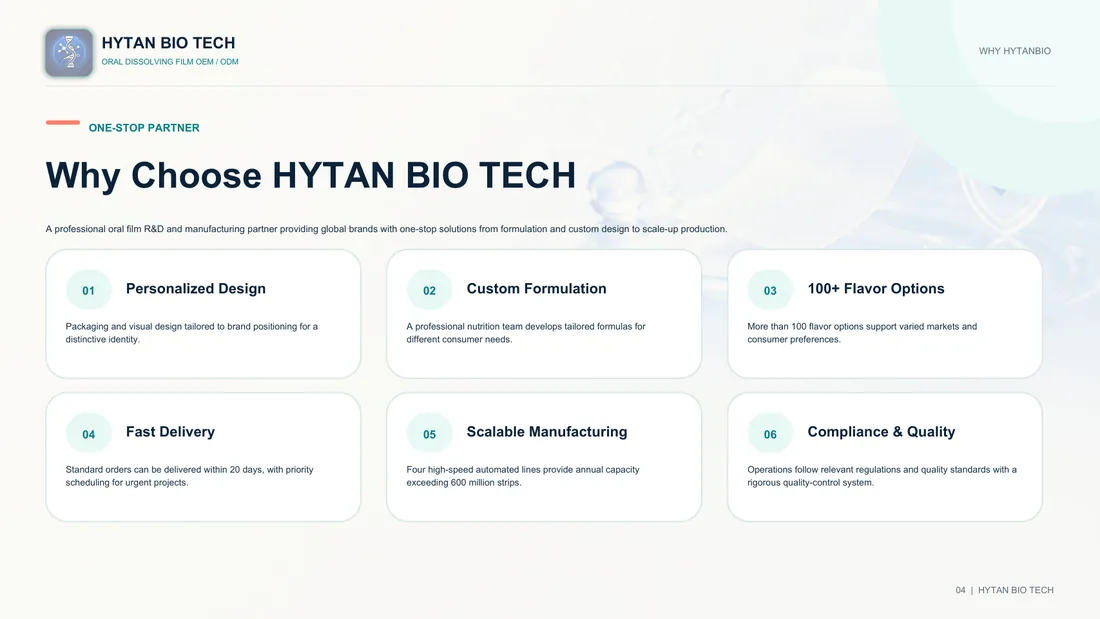
The company profile references personalized product design, custom formulation, 100+ flavor directions, flexible packaging support and scalable manufacturing. Standard-order lead time is described as within 20 days in the profile, subject to confirmed formula, packaging and order specifications.